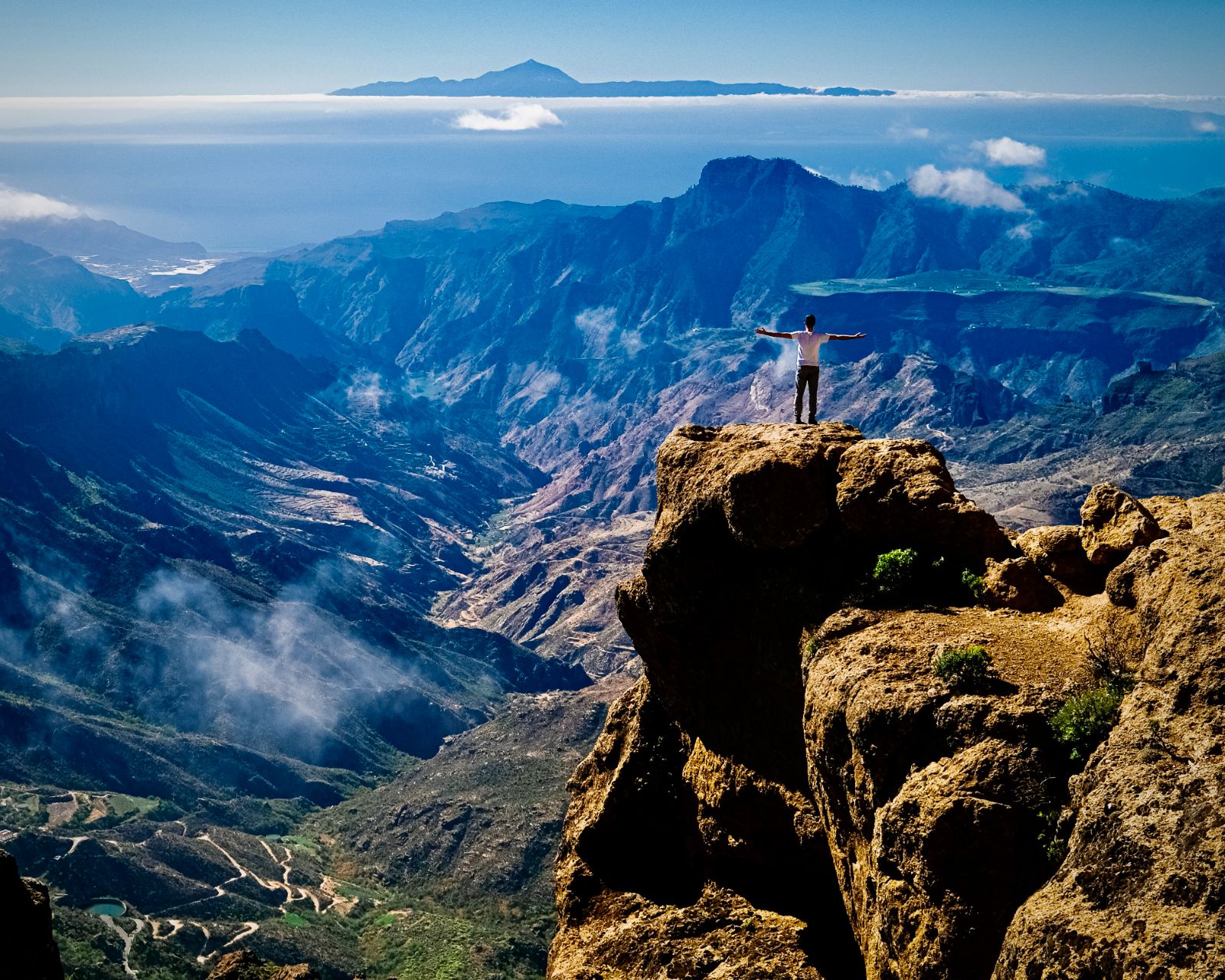
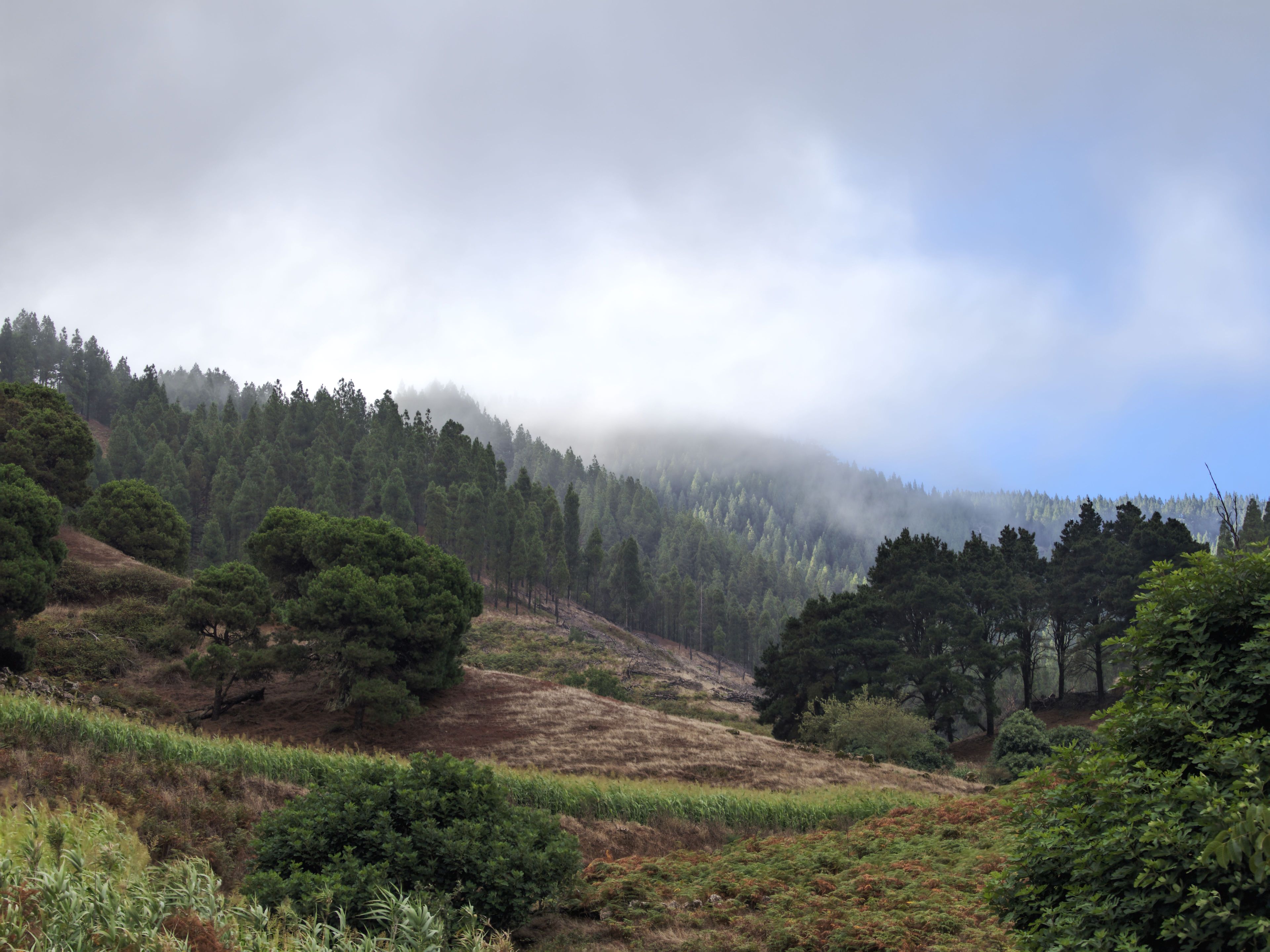
Roque Nublo is not just a rock; it is the soul of Gran Canaria. Standing tall at 1,813 meters, this volcanic crag has watched over the island for millions of years. Our hike began before dawn, while Barranco Hondo de Abajo still slept in silence, the only sound the wind whispering through the palm trees. The road into the island's heart winds through ever-changing scenery — from ancient terraced fields to pine forests fragrant with resin.
As we ascended, the Canarian pines gave way to a lunar landscape of bare volcanic stone. The mist swirled around us, creating an ethereal, otherworldly atmosphere. Then, suddenly, the clouds broke — revealing Mount Teide, Spain's highest peak on neighboring Tenerife, floating above a sea of clouds like an island in the sky.
For the island's ancient inhabitants, this was no ordinary rock but a sacred site — an almogarén, where rituals were performed in honor of their god Acoran. Standing there at sunrise, it's easy to understand why. Fun fact: the writer Miguel de Unamuno famously described this landscape as "a petrified tempest" — no words fit better. The trail itself is short, about 1.5 km from the trailhead, yet the memory lasts a lifetime. Dawn is the magic hour, before other hikers arrive — the sacred mountain is yours alone.
And afterwards? You return to our Casa Cueva, a home carved into the rock, whose stone walls share the same volcanic heartbeat as Roque Nublo itself. Breakfast on the terrace, views over silent ravines, no crowds — just you, the mountains, and the local rhythm of life. Because the real Gran Canaria begins where the asphalt ends.